

Study Smarter, Not Harder: The Complete Guide to Helping Your Child Learn and Stay Motivated

AI GENERATED IMAGE
If you have ever spent a Tuesday evening negotiating with a ten-year-old over twenty minutes of homework, you already know the real problem is rarely effort. Most children who struggle are not lazy. They are working without a method and no amount of pushing fixes a method problem.
This guide covers the three things that actually change how a child studies: how they learn, how they stay motivated, and how they talk to you about school. It is written for Singapore parents of primary and secondary students and it draws on what we have learned teaching learning and life skills to students for over two decades. Take what is useful; ignore the rest.
In short: Children rarely fail to study because they lack effort. They lack method, motivation, or both. Learning Mastery gives them techniques that work. Personal Mastery gives them a reason to use them. Communication Mastery keeps the door open so you can help at all.
Why Smart Children Still Struggle to Study

The effort myth
“I just need to try harder” is the most common and least useful advice a struggling student receives. Effort is not the bottleneck for most children. The bottlenecks are:
- Passive study. Re-reading notes and highlighting feels productive and changes almost nothing, because recognising information is not the same as being able to retrieve it.
- No system for review. Material is studied once and never revisited, so it is gone by the time it is needed.
- No sense of progress. When a child cannot see movement, effort feels pointless, and they stop spending it.
Notice that none of these are character flaws. They are all method problems, which means they are all teachable.
What “learning how to learn” actually means
Children who cope well with increasing workloads are not simply cleverer. They have usually picked up three habits — sometimes by accident — that make study more efficient:
- They test themselves rather than re-reading.
- They space out review instead of cramming.
- They organise knowledge so that it has structure they can navigate.
None of that is innate. All of it can be taught, and the earlier it is taught, the less it has to be repaired later.
The three skills that separate confident learners from stuck ones
We organise this work around three pillars, and they are a useful frame for any parent:
- Learning Mastery — the techniques that make study efficient.
- Personal Mastery — the motivation, confidence and resilience to keep going.
- Communication Mastery — the relationships and self-expression that make school liveable.
A child with strong techniques but no motivation stops using them. A child with motivation but no technique burns out. You need both, and the third pillar is what lets you reach them at all.
Learning Mastery: How to Help Your Child Study More Effectively
AI GENERATED IMAGE
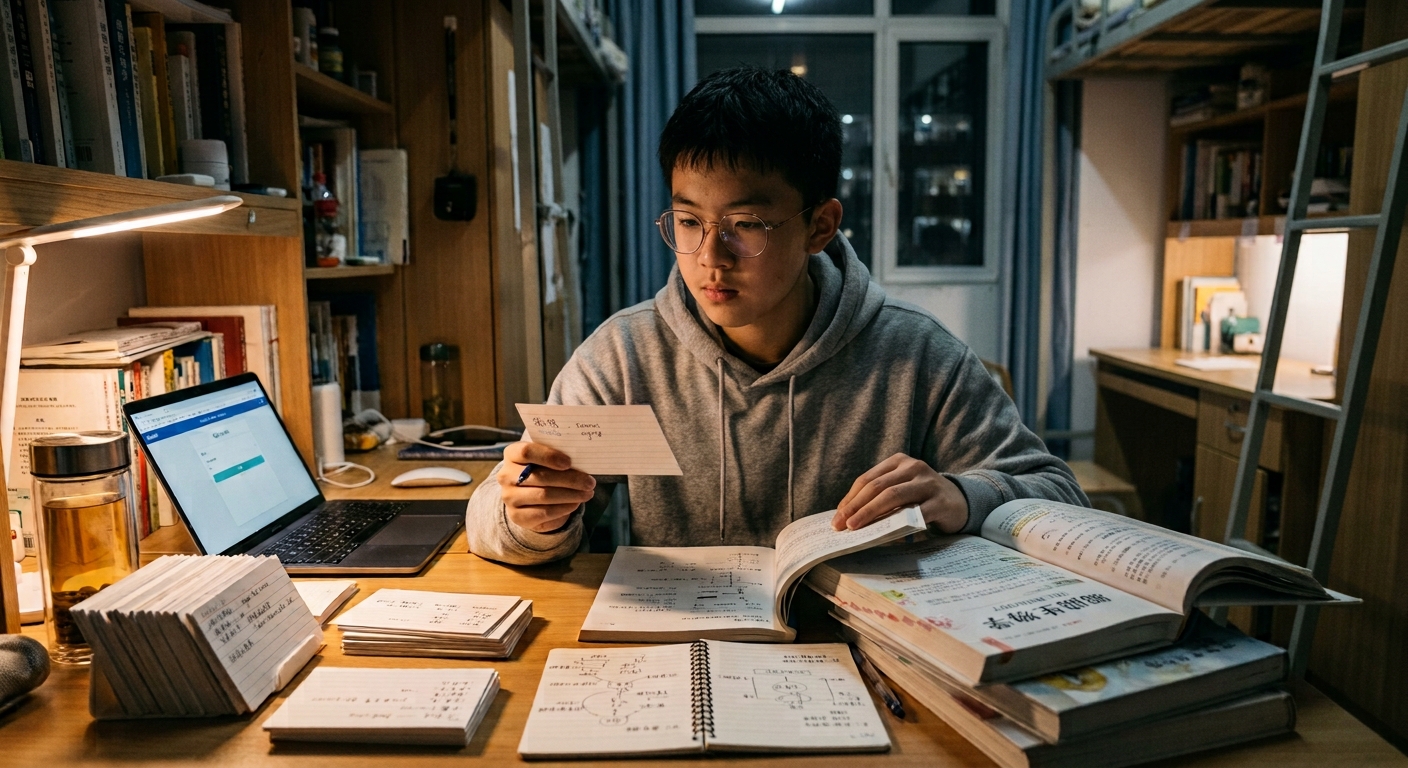
Technique 1 — Active recall over re-reading
Instead of reading a chapter again, close the book and ask your child to tell you what they remember. Then open it and check.
This feels harder, which is exactly why it works. Retrieving information strengthens memory far more than reviewing it does. For a Primary 4 child, keep it to a few minutes: “Tell me three things you remember about the water cycle.” For a secondary student, have them write a blank-page summary before checking their notes.
AI GENERATED IMAGE
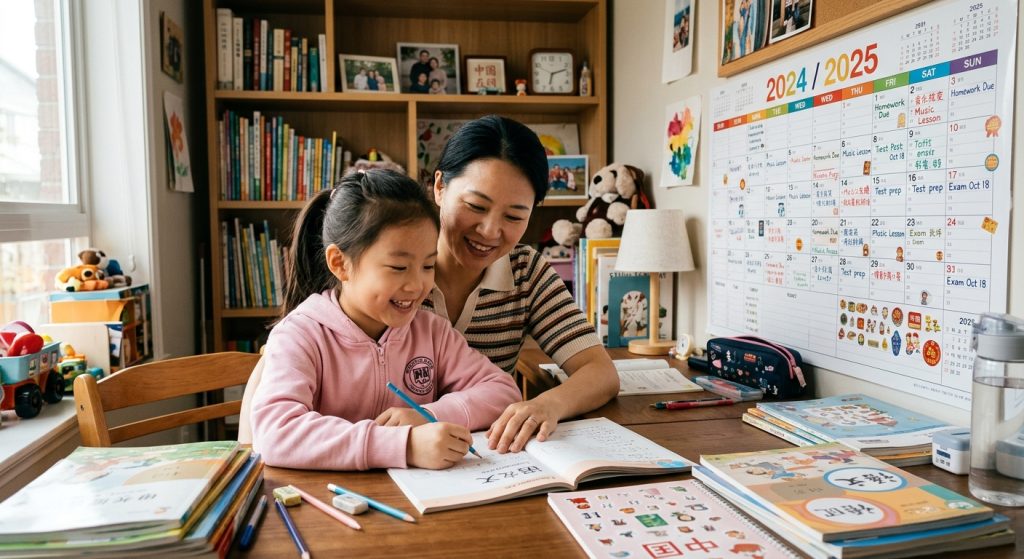
Technique 2 — Spaced review, explained for a primary-school parent
A single long study session is remembered worse than three short ones spread across days. That is all spaced review is.
A simple rhythm: revisit a topic the next day, then three days later, then a week later. Ten minutes each time. Put it in a visible family planner so the child does not have to hold it in their head.
AI GENERATED IMAGE
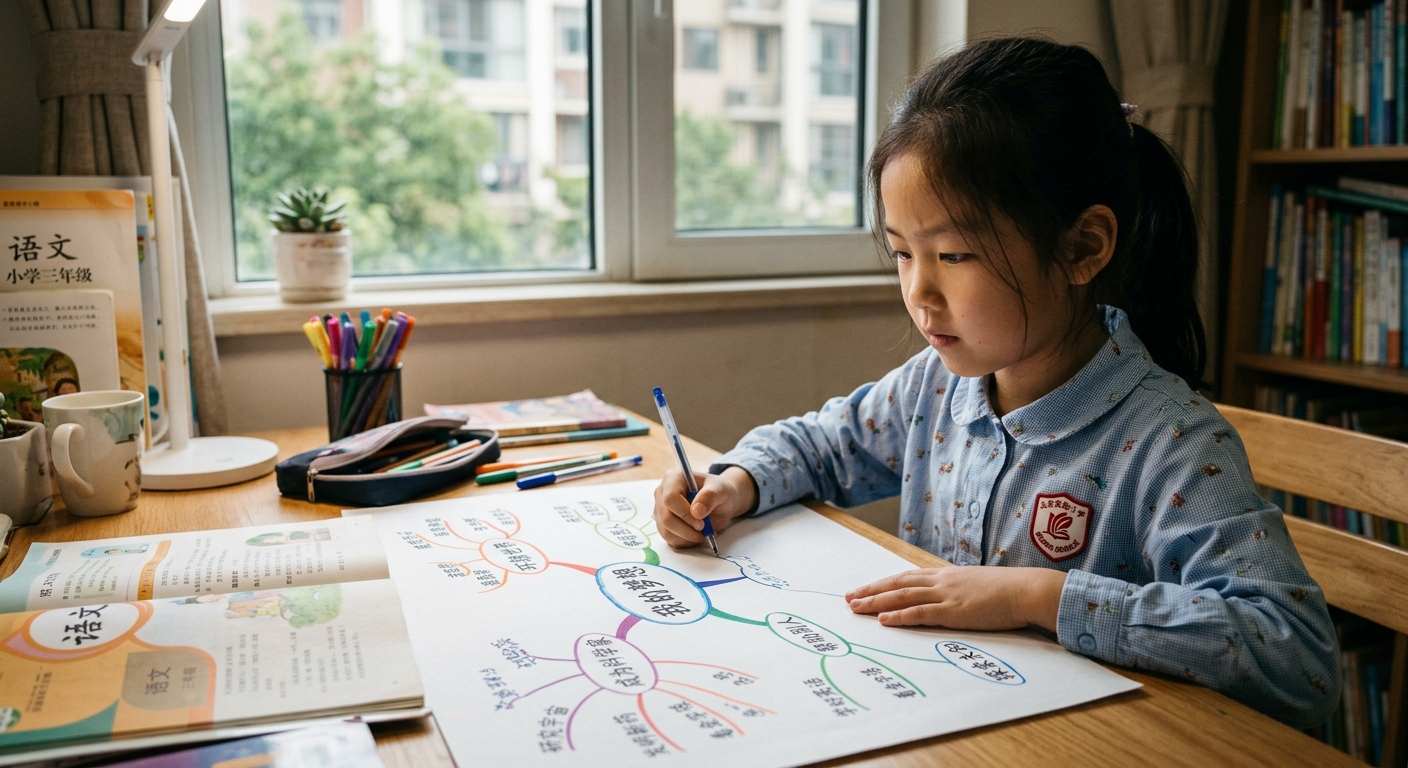
Technique 3 — Mind mapping: turning a chapter into a picture
A mind map puts the main idea in the centre and grows branches outward for each supporting idea. It works because it forces your child to compress, connect and reorganise — not copy.
Two rules matter more than the drawing: one idea per branch, and redraw it from memory afterwards. A beautiful map copied from a textbook teaches very little.

AI GENERATED IMAGE
Technique 4 — Finding resources independently
By upper primary, the useful skill shifts from memorising content to knowing where to look and how to judge a source. Ask your child to find a video or article explaining a topic, then have them explain it back to you. Then ask: how do you know that source is right? That second question is the one that will carry them furthest.
How to teach these at home without becoming a tutor

You do not need to master the content. You need to ask better questions. Replace “do you understand this?” — which almost always gets a yes — with:
- “Explain this to me like I’m your age.”
- “What part is still confusing?”
- “What would this question look like if it were harder?”
Your role is to be curious, not correct.
Personal Mastery: Building Motivation That Doesn’t Need You
AI GENERATED IMAGE
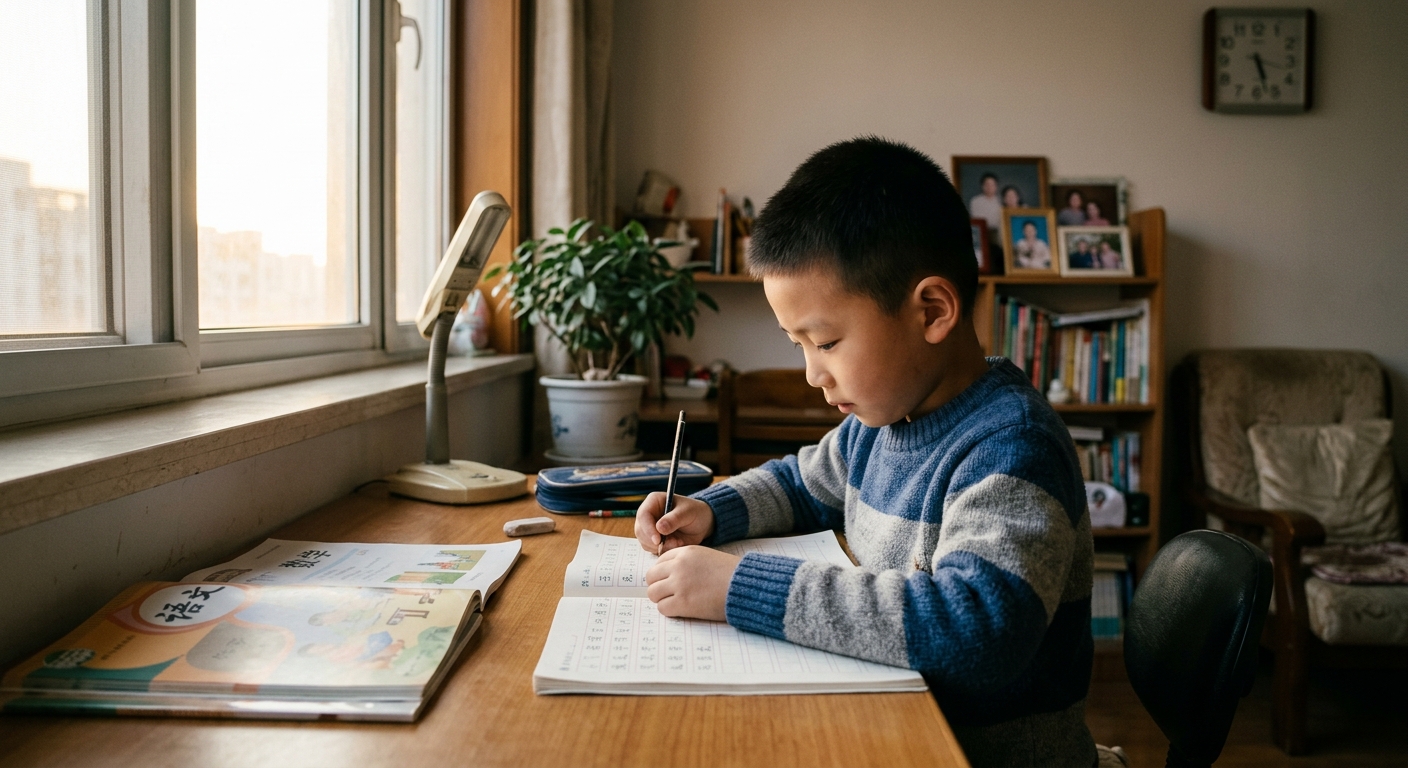
Why forcing revision backfires
Pressure works in the short term and costs you in the long term. A child who studies only under supervision never builds the internal machinery to study alone, which is precisely the skill that secondary school demands.

AI GENERATED IMAGE
The real reasons children disengage
When a child says “I don’t care”, that is usually a symptom, not a diagnosis. Underneath, it is often one of these: they tried and still failed, so protecting their pride looks like not trying; the task feels so large they cannot find a first step; they are genuinely exhausted; or they cannot see how any of it connects to a life they want.
If this is your situation, our guide on what is really behind a child who will not study goes deeper.

AI GENERATED IMAGE
Goal setting your child will actually own
A goal your child did not choose is a goal they will abandon. Help them set something small, specific and within their control — “finish the fractions chapter by Friday” rather than “get better at maths”. Then make the progress visible.
AI GENERATED IMAGE
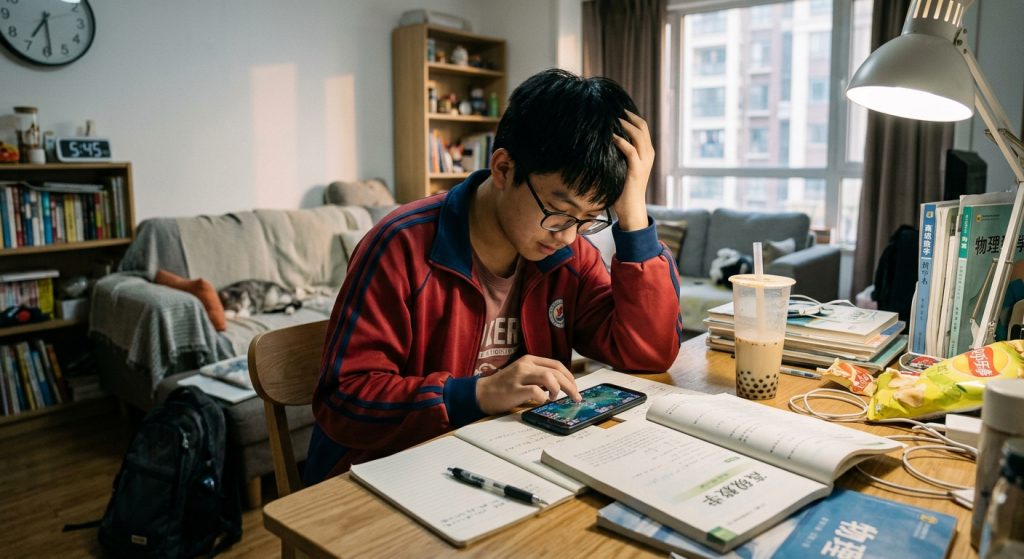
Procrastination: what it looks like at each age
Procrastination does not look the same at eight and at fifteen. In younger children it usually means the task is unclear or too big. In teenagers it is often about autonomy — and the more you push, the slower they go. Our guide to the stages of procrastination breaks this down by age.
AI GENERATED IMAGE
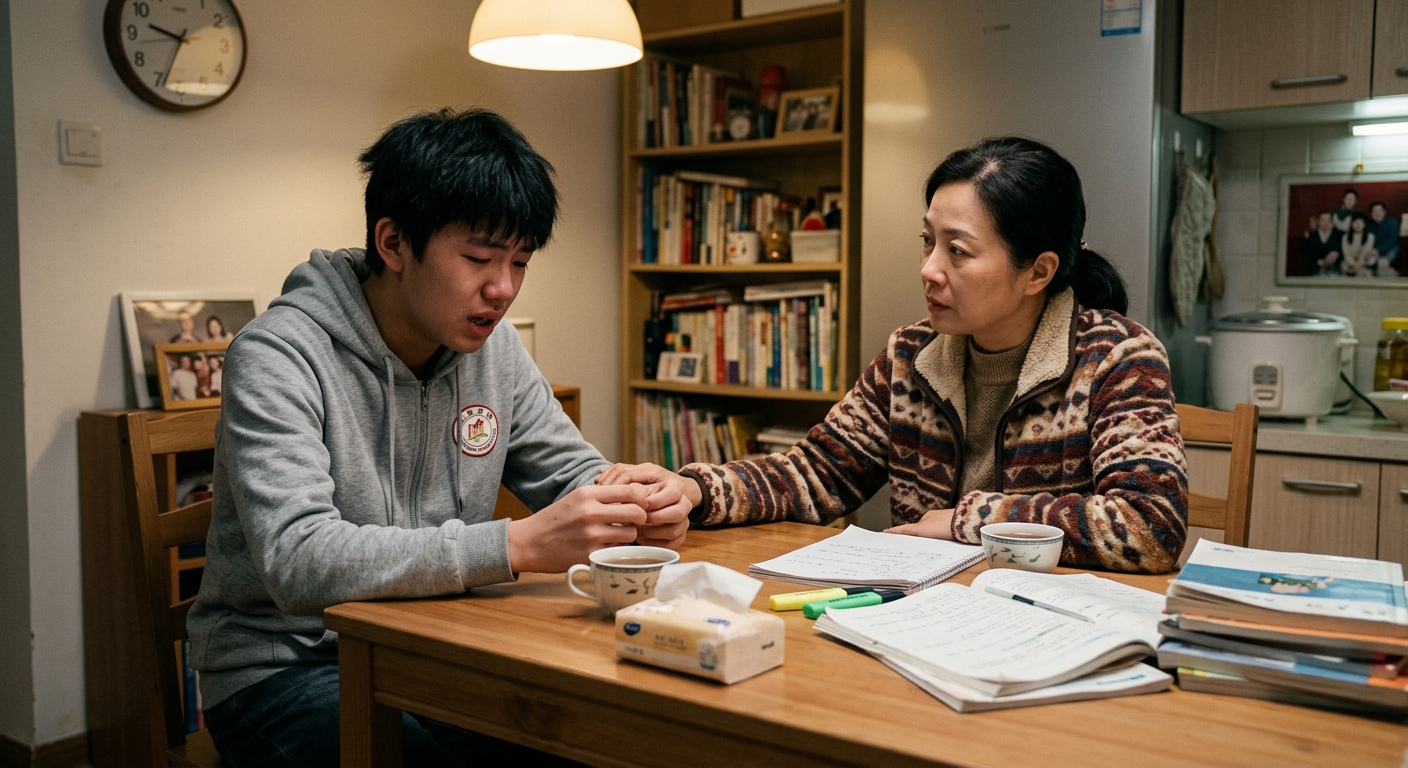
Managing exam stress without dismissing it
“Ignore it and just do your best” tells a worried child their worry is wrong. Try naming it instead: “It sounds like you’re worried you’ll let yourself down.” Then separate the controllable from the uncontrollable, and work only on the controllable.
Communication Mastery: Getting Your Child to Talk to You About School

Why “how was school?” fails
It invites a one-word answer and gives the child nothing to respond to. It is also, from their side, a question they have answered eighty times.
Conversation habits that open children up
- Ask specific, low-stakes questions: “What was the funniest thing that happened today?”
- Talk shoulder-to-shoulder, not face-to-face. Cars, walks and kitchens work better than across a table.
- Answer first occasionally. Children learn to share by watching you share.
- Resist fixing. The moment you turn their problem into a lesson, the conversation ends.
For more on this, see how to build rapport with your child.
Handling conflict over homework
Pick your battles and set them in advance, when nobody is frustrated. Agree a time and a place for homework during calm, and then refer back to it instead of renegotiating nightly. If you are finding yourself in the same argument repeatedly.
Exam Preparation: A Term-by-Term Approach
Exam preparation fails when it is crammed into the final month. Spread across the year, it is far lighter.
Six months out. Close gaps in understanding. This is when a child can afford to move slowly through a topic that does not make sense yet.
Three months out. Shift to practice under mild time pressure, and start spaced review of older topics so they do not decay.
The final month. Consolidate. Reduce new material. Protect sleep — a tired brain retrieves worse than a rested one, and this is the one variable entirely within your control.
For the P6 year specifically, our guide on what how parents can support your taking PSLE and 10 actionable steps for PSLE students.
When Home Support Isn’t Enough
There is no shame in this, and it is more common than parents admit. Sometimes the blocker is not knowledge but the relationship itself — a child who will take instruction from anyone except a parent. Sometimes a child is fine academically but stuck on confidence. And sometimes a specific subject gap needs a subject specialist, which is what tuition is genuinely good at.
It is worth being clear about which problem you actually have, because the fixes are different. Tuition addresses a subject gap. Enrichment adds breadth and interest. Learning and mindset skills address how a child studies and whether they believe they can.
Frequently Asked Questions
At what age should a child learn study skills?
Simple techniques — self-testing, short spaced review, making a plan — can start around Primary 3 or 4. Metacognitive skills, meaning the ability to judge what they do and do not understand, develop further in upper primary and secondary school.
How many hours a day should my child revise?
There is no universal number, and any source quoting one is guessing. The right amount is whatever can be sustained consistently without damaging sleep, health or family relationships. Consistency over weeks matters more than intensity in any single day.
Is it too late to help a Sec 4 child?
No. Study methods, motivation and exam technique can all change in a single year. What is unrealistic is expecting a complete rebuild in the final weeks — the earlier in the year you start, the more room there is.
Can study skills really be taught in a few days?
Techniques can be introduced quickly and practised well within a short programme. Consolidating them into habit takes longer and depends on what happens at home afterwards — which is why follow-up matters more than the initial event.
Should I hire a tutor instead?
If the problem is a specific subject gap, a subject tutor is usually the most direct fix. If the problem is that your child does not know how to study, a tutor may help them pass without changing the underlying pattern. It is worth diagnosing which problem you have.
The Next Step
If you would like to see how we approach this with students, we run a free introductory workshop for parents of children Primary 4 and above — a chance to understand the approach before deciding whether it suits your child. You can find the details here.
This article is general educational guidance for parents. It is not medical, psychological or diagnostic advice. If you are concerned about your child’s mental health, please speak to your family doctor, your school counsellor, or an appropriate professional service.

If it is possible for others, it’s possible for you.
It is only a matter of strategy.
No matter what strategies you decide on, whether to pick up a relevant self-help book or attend a prestigious school holiday programme, remember that it all begins with your beliefs – how you see yourself and what you say to yourself every day.